
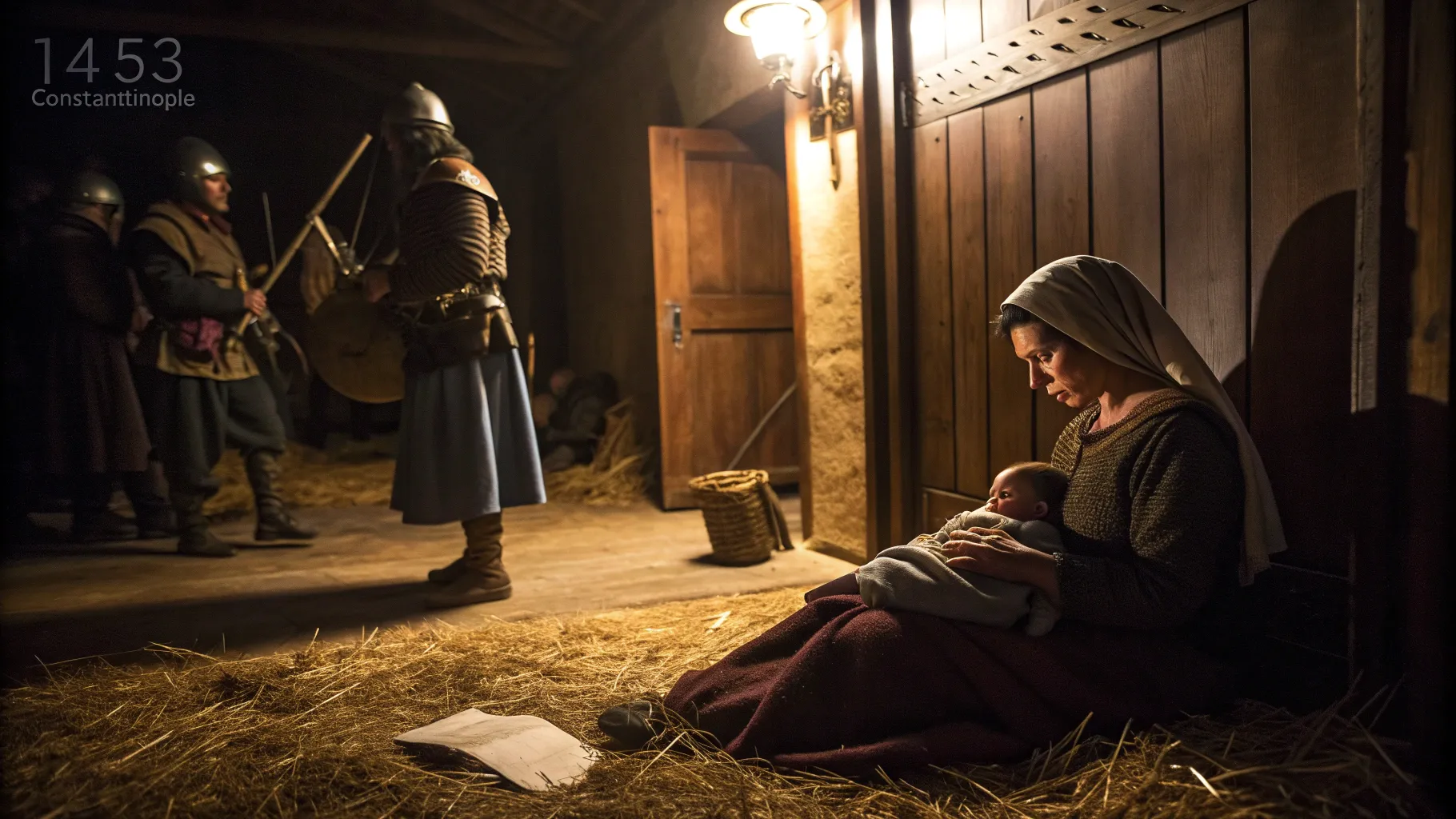
I explored a brutal, bureaucratic side of Ottoman expansion that rarely appears in popular histories: how conquest became a system of human processing, trafficking, and institutionalized sexual violence. The image I begin with is deliberate and personal — a young mother in 1453 Constantinople, cradling an infant while soldiers break down her door. That scenario is not a cinematic invention. It is the kind of scene that emerges repeatedly in contemporary chronicles and Ottoman administrative records when we read the archival traces without flinching.
This article is a longer, careful unpacking of the claims and evidence I presented in the video. I write in the same voice and with the same urgency: to describe what happened after victory was declared — the policies, the logistics, the legal frameworks and the social consequences — and to point readers toward the archival traces that make clear this was not chaos but policy. Below I outline the system I call the Harvesting Protocol, examine its legal and economic mechanisms, trace the logistics of capture and transport, and reflect on the cultural legacy of sustained, systematic gendered violence across centuries and continents.
Outline
- Introduction: a single family's catastrophe as a window into systematic practice
- The Harvesting Protocol: how surrender was processed like inventory
- Bureaucracy and commerce: shipping manifests, markets, and pricing human lives
- Psychological warfare: public sorting, separation of mothers and children, terror as strategy
- Logistics of transport: slave ships, mortality rates, and economic calculations
- Legal frameworks: codifying rape, marriage, and property in Ottoman law
- Conversion centers, formation programs, and enforced reproductive labor
- Incentives and feedback loops: bonuses, raids, and the industrialization of capture
- Cultural consequences: community adaptations, scarring, hiding, and long-term trauma
- Conclusion: the archives and the ethical obligation to confront this history
Introduction: From Ramparts to Records
The fall of Constantinople on May 29, 1453, is one of history's watershed moments. Military historians rightly focus on the technological and strategic factors — the large cannons, the breach in the walls, the leadership of Sultan Mehmed II. But victory did not end with the raising of flags. Within hours and days after a defensive line was broken, the Ottomans initiated a tightly organized sequence of actions that turned conquered populations into fiscal assets and instruments of imperial control.
In the contemporary sources this sequence appears in two complementary lights. Byzantine chroniclers describe scenes of terror, forced separations, and mass killings that read like nightmares. Ottoman administrative documents, by contrast, record the same events in the dry language of ledgers, transport receipts and military manuals. The contrast is chilling: one set of documents records human lives as tragedies, the other records them as inventory.
The Harvesting Protocol: Processing People Like Spoils
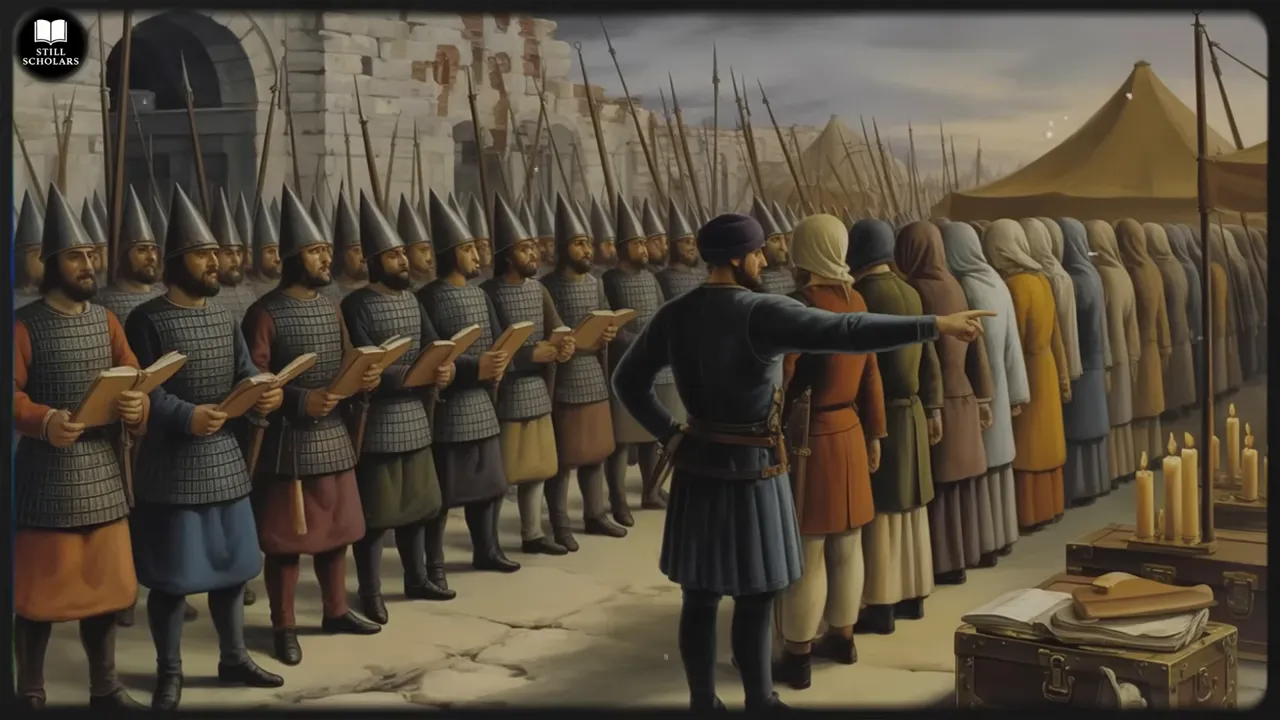
When Ottoman armies breached defenses, the first phase of conquest was organized, purposeful and bureaucratic. This process appears in military manuals and in lists later filed in provincial archives. It is sometimes referred to in the sources I examined as the Harvesting Protocol — a term that captures both the agricultural metaphor and the grim efficiency of the practice.
Important features of the protocol were common across sieges and raids:
- Systematic executions of males considered potential future threats — adult males and adolescent boys were killed in groups following surrender rather than in chaotic battlefield slaughter.
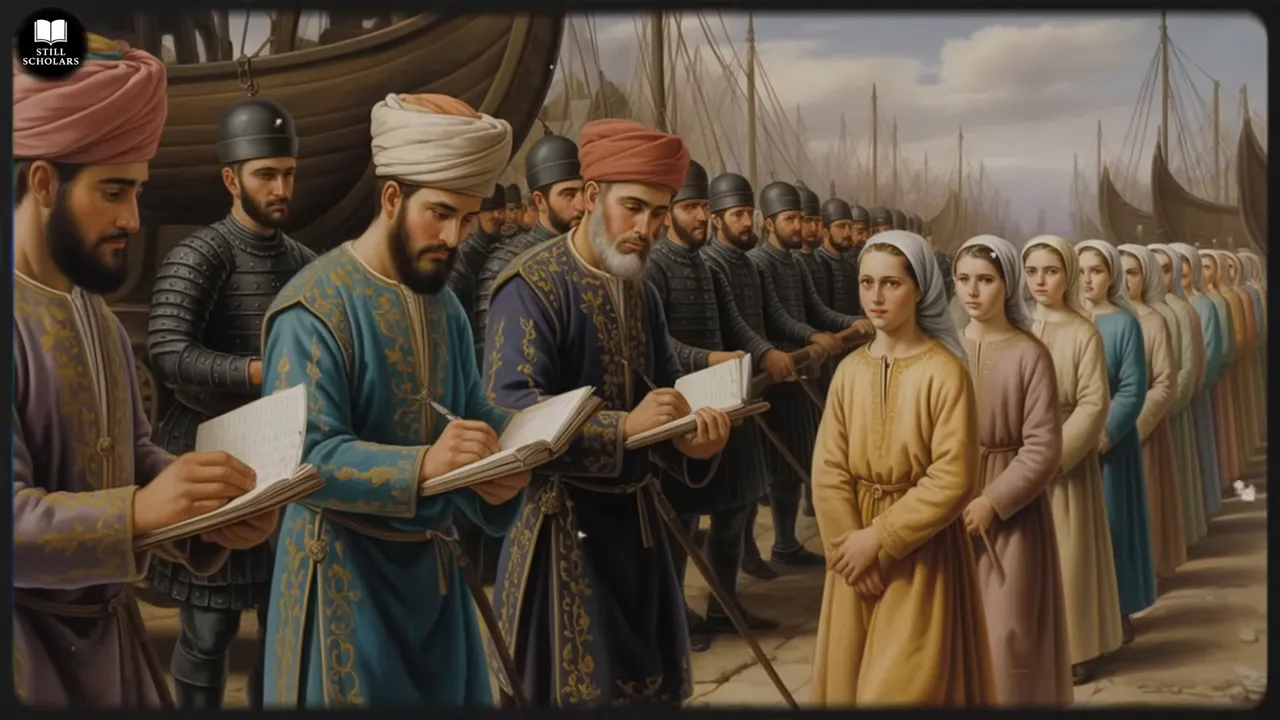
- Comprehensive categorization of women by age, physical condition and perceived economic value, with immediate sorting in public spaces.
- Forced separation of families in front of the surviving population, designed to produce maximum psychological damage.
- Detailed record-keeping that treated human beings as commodities: numbers, ages, descriptions and price estimates rather than names.
The protocol was applied in Constantinople. Ottoman lists from the aftermath of the city's fall enumerate thousands of people processed within days. The numbers the archives preserve are not mere estimates; they were administrative entries used to allocate human property, to load ships and to distribute captives among units of the army.
Who Lived, Who Died, and Who Was Taken
The logic of the protocol prioritized the elimination of future military threats and the capture of people who could be exploited. The decisions were economical: men and older women who were unlikely to produce profitable labour or offspring were more likely to be executed. Girls and young women were categorized for different types of exploitation.
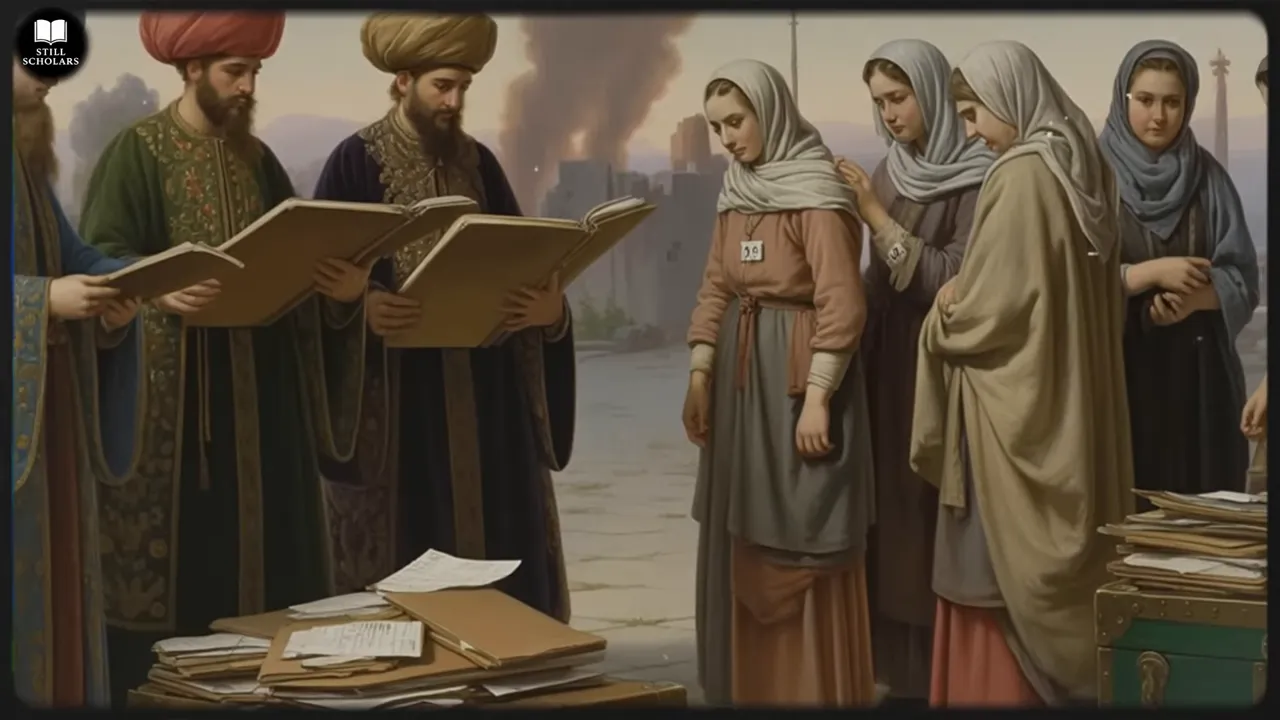
According to Ottoman records cited in the sources I examined, thousands of women in Constantinople were assigned to age-based categories:
- Young women (roughly 14–25): the most valuable group, assigned individual numbers and market values in lists.
- Prime-working-age women (25–40): considered suitable for manual labour or domestic work but less valuable for other purposes.
- Older women (over 40): frequently executed, judged too costly to maintain or transport.
Children were separated along gendered lines. Boys under six were often taken into conversion systems that could eventually place them within the imperial military or bureaucracy. Girls under twelve entered formation programs whose stated purpose in administrative documents was to prepare them for specific roles inside the empire — roles that were overwhelmingly sexual and reproductive.
"The moment an Ottoman army broke through enemy defences, a carefully orchestrated process began that had nothing to do with military necessity and everything to do with systematic exploitation."
Bureaucracy and Commerce: Human Lives in the Ledgers
One of the most unnerving aspects of the archival material is the mundane, mercantile language used to describe human captures. Ships' manifests placed people on the same bill of lading as bolts of silk, sacks of pepper and casks of wine. Price notations appear beside age and physical descriptors. Names are often absent. Where names exist, they are frequently replaced in later records by Ottoman identifications.
A typical entry we can reconstruct from the records might list textiles, spices and "15 females aged 16 to 20 years, excellent condition." That phrase captures the transactional nature of the practice: "excellent condition" read as if the captives were agricultural produce or livestock ready for sale. Administrators recorded the mortality of transport, set prices that fluctuated with supply and demand, and kept bills of sale that legalized exchanges across imperial markets.
Slave Markets and Pricing
Large Ottoman cities contained markets with dedicated sections for human trade. These markets were regulated in ways familiar to anyone who studies commercial history: they had pricing structures, reputation mechanisms, official oversight and contractual records. Different origins, perceived beauty, health and age created price differentials.
- Young Greek or Serbian women were often priced in a certain range (the records I used cite figures similar to 20–30 silver pieces in Istanbul markets), reflecting demand in particular urban centers.
- Women of African origin were also sold, with prices shaped by market perceptions of physical characteristics and supply lines.
These markets did not operate in ignorance of law. Bills of sale, transport receipts, and court records document the transfer of ownership, the vetting of purchases, and disputes over claims. The legal and commercial apparatus normalized the human trade, making it part of the empire’s fiscal and administrative structure.
Psychological Warfare: Sorting, Separation, and Terror
What made the Harvesting Protocol especially insidious was not only its economic logic but its intentional use of public spectacle to break communities. Sorting and separation were carried out in public squares — often in front of burning churches or the ruins of civic buildings. Families were forced to watch. Mothers watched daughters being pulled away. The Ottomans understood that the deep psychological trauma of these scenes had a strategic function: terror is a force multiplier.
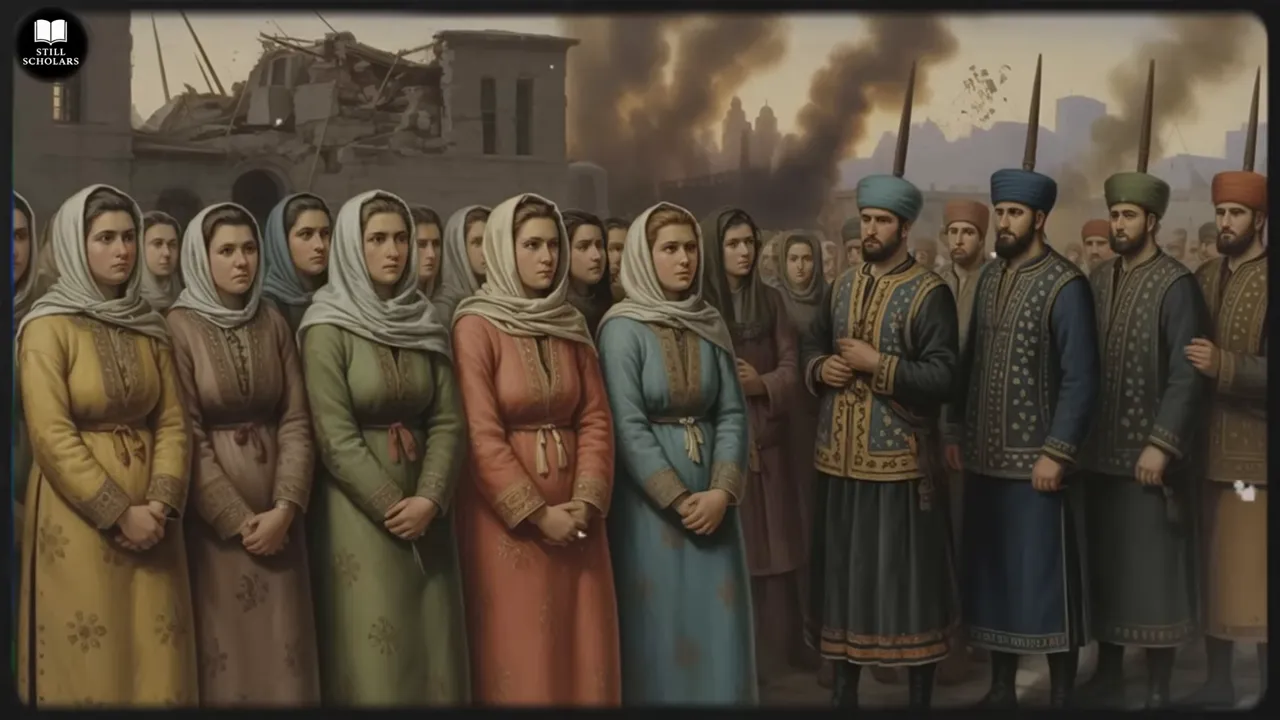
Soldiers deliberately separated infants from their mothers in front of crowds. Contemporary accounts describe how crying babies were sometimes killed immediately, not for practical reasons but as a demonstration of total control. The message was calculated and unequivocal: resistance would lead to the most intimate of human losses. The spectacle was designed to deter future rebellions and to ensure easier submission of other towns and villages when Ottoman forces arrived.
"The message was clear. Resistance meant watching your children die."
Logistics of Transport: Ships as Floating Prisons
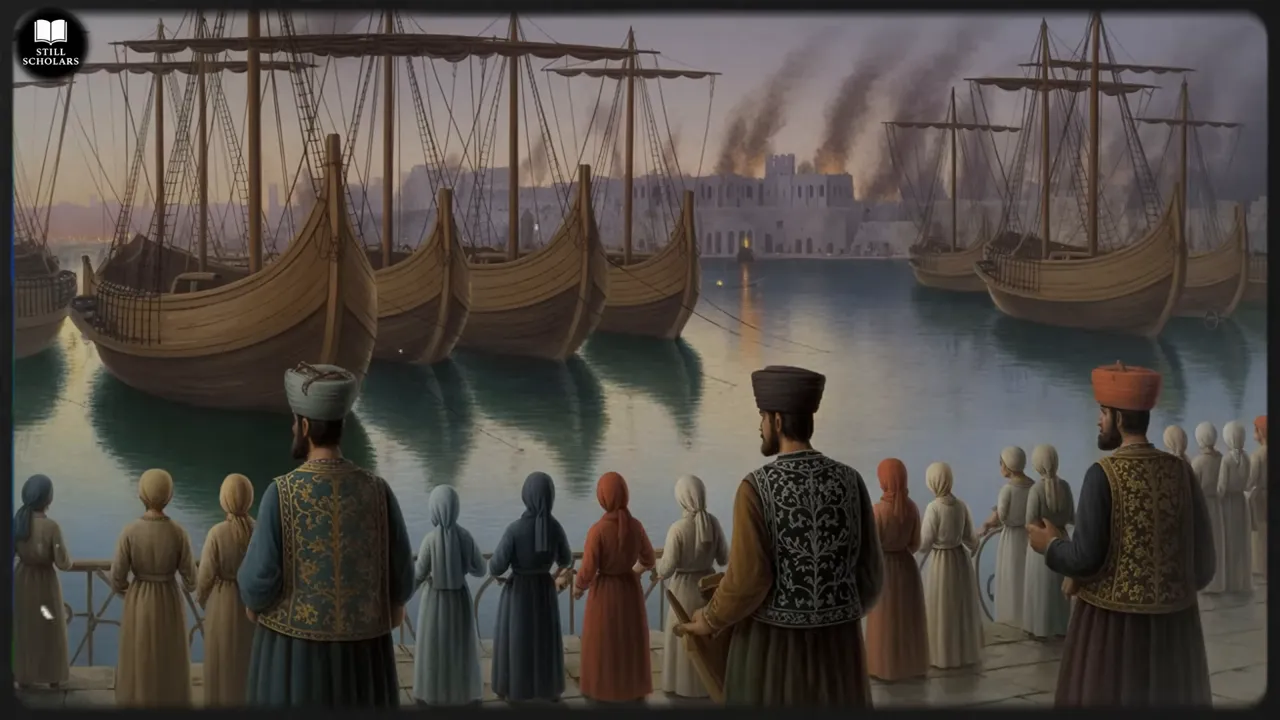
Once women and children were categorized and allocated, they were moved. The empire's transport logistics were not haphazard. Specialized ships traveled routes that linked newly conquered regions to established slave markets. Archaeological research into maritime vessels of the period shows that merchants and administrators adapted ship designs to human cargo: ventilation channels, water storage, and crude waste management systems were installed to maximize survival rates over weeks-long voyages.
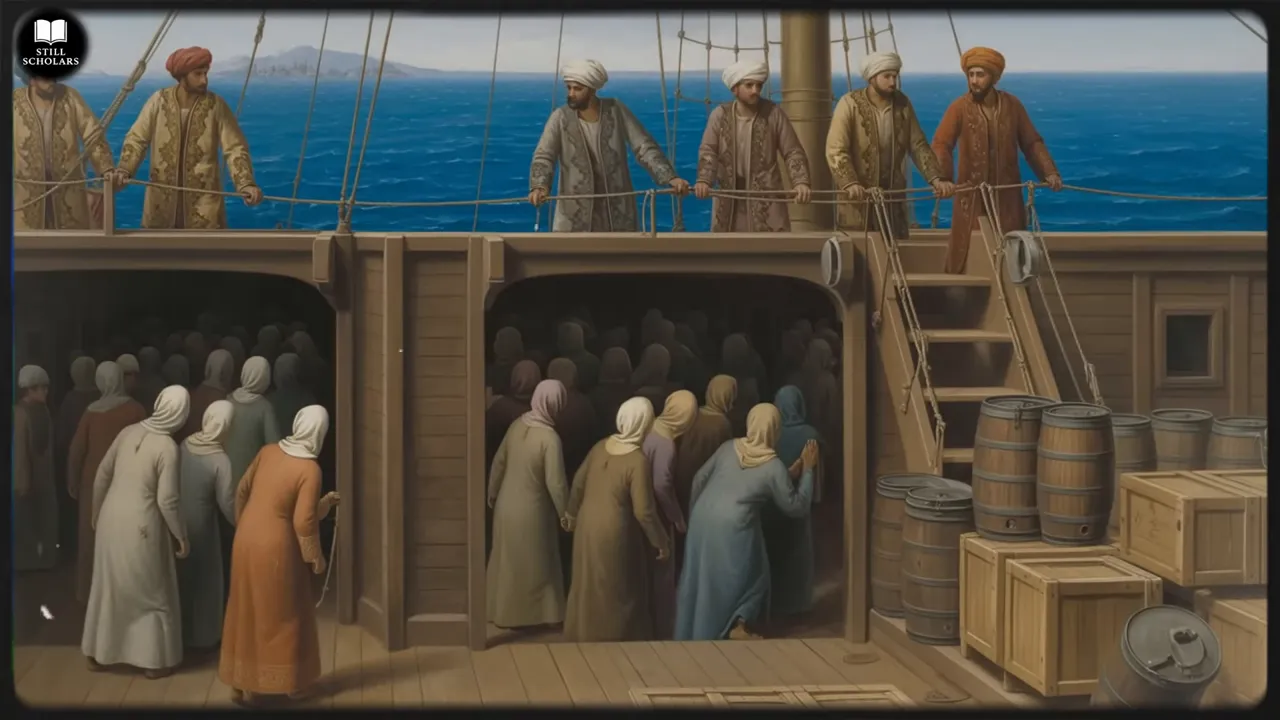
Keeping people alive was an economic decision. The Ottoman archives record mortality rates during transport — averages around 15% in many shipments. Administrators treated those deaths as expected loss. Captives who died were sometimes recorded on manifests alongside spoiled grain or damaged goods. Survivors continued their journeys, stripped of names and possessions, given numbers and basic garments that marked them as property.
Why Ships, Why Numbers?
Transport logistics mattered for two reasons. First, moving captives to markets or to facilities near centers of political power required coordination across great distances. Second, maintaining records and numbers simplified later administrative processes: distribution among troops, sale in markets, registration in conversion centers, assignment to households or institutions.
Those numbers replaced identity. For administrators the system worked: it integrated human cargo into the empire's fiscal structure as if the captives were another class of commodity to be tracked, valued and mobilized.
Legal Frameworks: From Rape to Marriage, From Murder to Property
Perhaps the most disturbing element of the system was not just the violence but how it was normalized through legal codification. Ottoman legal codes and military court records do not always read like championing the rights of captives. In many cases they established procedures that converted sexual violence and dispossession into lawful property claims.
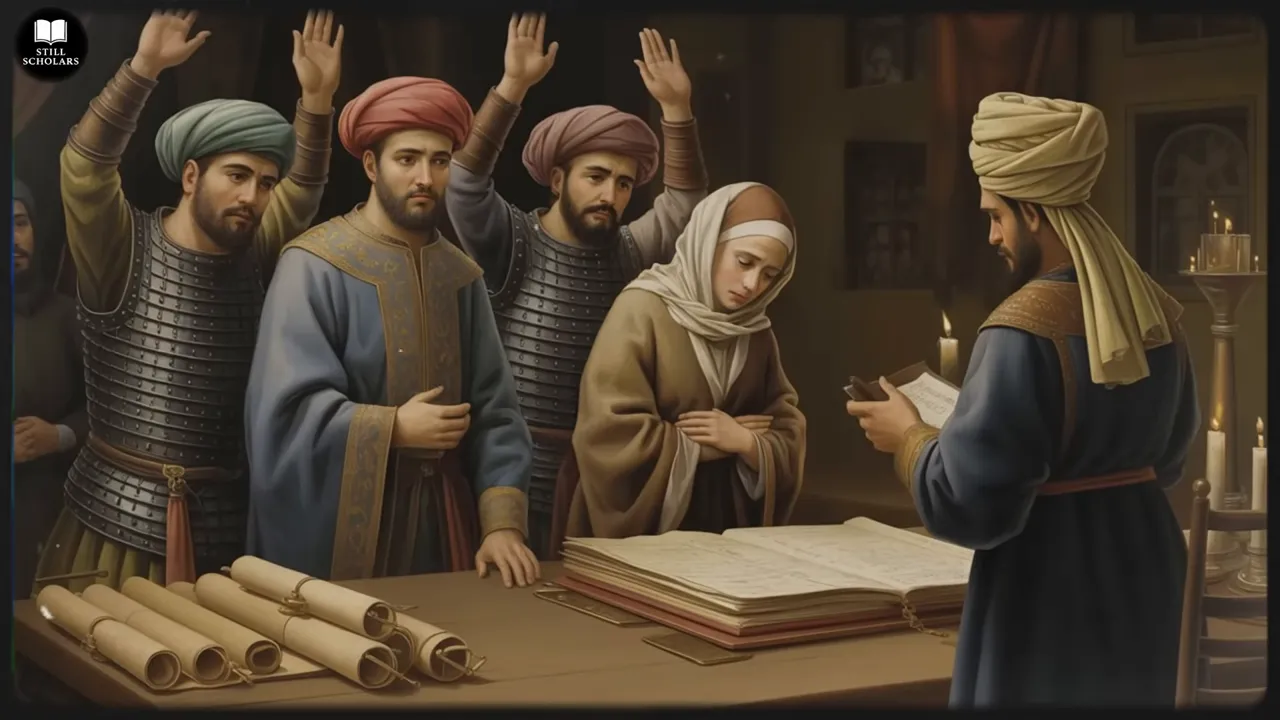
One fundamental institution illustrates this legal normalization: the concept of the war wife. When a warrior killed in battle left a widow, Ottoman procedural law allowed the killer to claim her as property. This process required witnesses and had a time window — often forty-eight to seventy-two hours in the records I have read — after which challenges could arise. The courts treated disputes over women as disputes over livestock, adjudicated by military tribunals that recorded claims, witnesses and the outcomes in careful detail.
Conversion as Obligation and Pressure
Legal ownership was accompanied by forced religious conversion. The process of conversion was a public and ritualized performance in many cases: women were required to denounce previous beliefs. Sources describe ceremonies where captives were made to burn religious objects, to voice denials of their former faiths, or to participate in formulas that marked them as Muslim. Those who resisted faced punitive measures designed to break them without diminishing their market value.
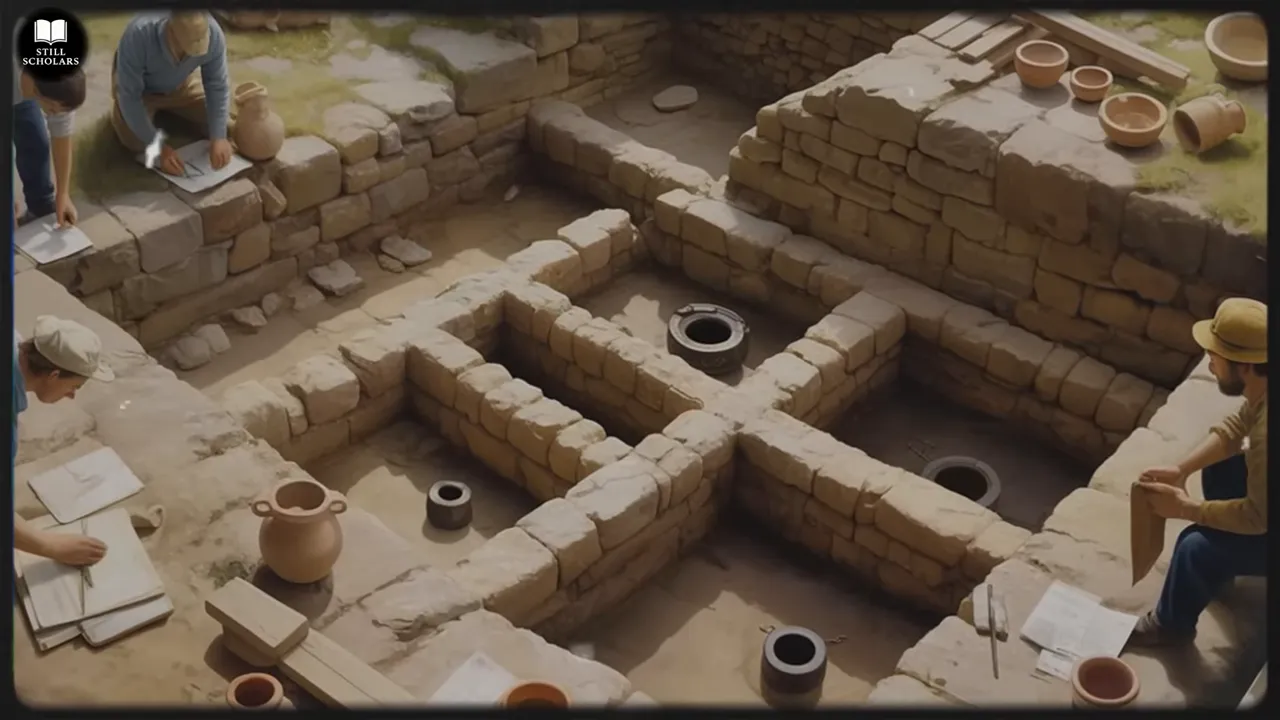
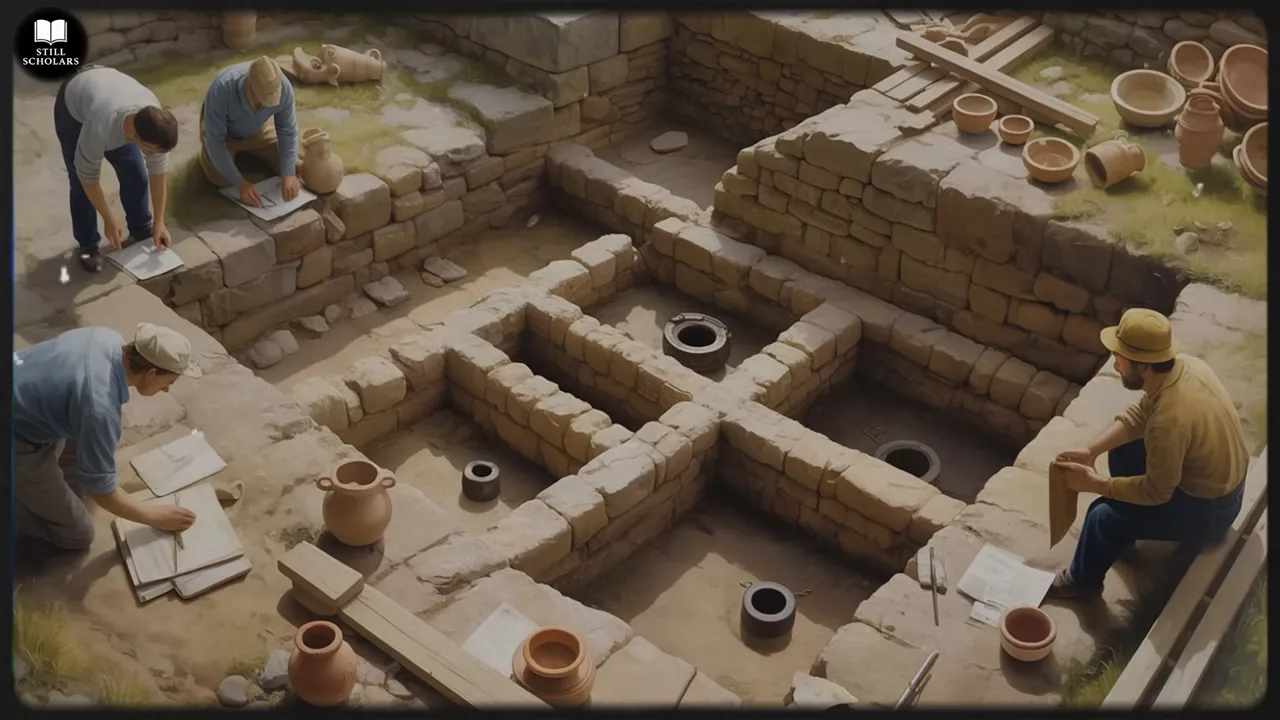
Conversion centres in provincial capitals — archaeological remains of which have been found near Bursa and Adrianople — were purpose-built for processing large numbers of captives. The architecture of these buildings suggests containment, monitoring and ritualized instruction. Chambers, drainage and mechanisms for restraint have been interpreted by archaeologists and historians as evidence of institutionalized programs of enforced religious and cultural transformation.
Formation Programs and the Politics of Reproduction
Ottoman administrative language often described girls as entering formation or schooling programs, terminology that masks their actual purpose. The programs were usually months in length; the records suggest a typical duration of around six months — long enough, precisely, to ensure pregnancies resulting from systematic sexual violence. Why ensure pregnancy? Because biological bonds — forced as they were — created dependencies that complicated escape and escape planning. Children born to enslaved mothers became, in many regimes of practice, citizens of the empire or institutionalized servants, and thus less likely to form a basis of resistance.
Administrative registers tracked pregnancy rates, infant mortality and the output of what they termed "productive" female captives. Some records read like agricultural reports: optimal ages for capture were specified, the productivity of a female captive was tracked across years, and policies were set to maintain a certain reproductive output. In the bureaucracy's calculus, women were assets whose value could be increased or depreciated by careful management.
Children, Fate and “Erasing” Identity
Children born in captivity were often immediately evaluated by imperial criteria. Boys with physical or intellectual promise were separated from mothers early and, in some cases, inducted into the Janissary system or other administrative roles after reeducation. Girls were often earmarked to follow in their mothers' footsteps — future domestic workers, future breeding stock, or both. The regime of separation was deliberately traumatic: it severed family ties and made mothers emotionally dependent on their captors by removing their children.
Mixed blood offspring posed a particular dilemma for administrators. Some records suggest that children who too visibly bore their mother's ethnicity or cultural markers faced execution; others were absorbed into the imperial system but raised without knowledge of their maternal origins. The goal was clear: eliminate evidence of violence and replace it with institutionalized loyalty to the empire.
Incentives, Feedback Loops, and the Industrialization of Capture
A system this pervasive could not have been sustained without incentives that favored capture over conquest. Military rewards, promotions and economic preferments helped entrench the practice. Commanders and soldiers were often granted bonuses tied directly to the number and quality of prisoners captured. Slave traders who supplied premium captives received preferential treatment in imperial contracts. These incentives institutionalized targeting of civilians. Capturing people — particularly women and children deemed valuable — became a metric of military success as decisive as territory or booty.
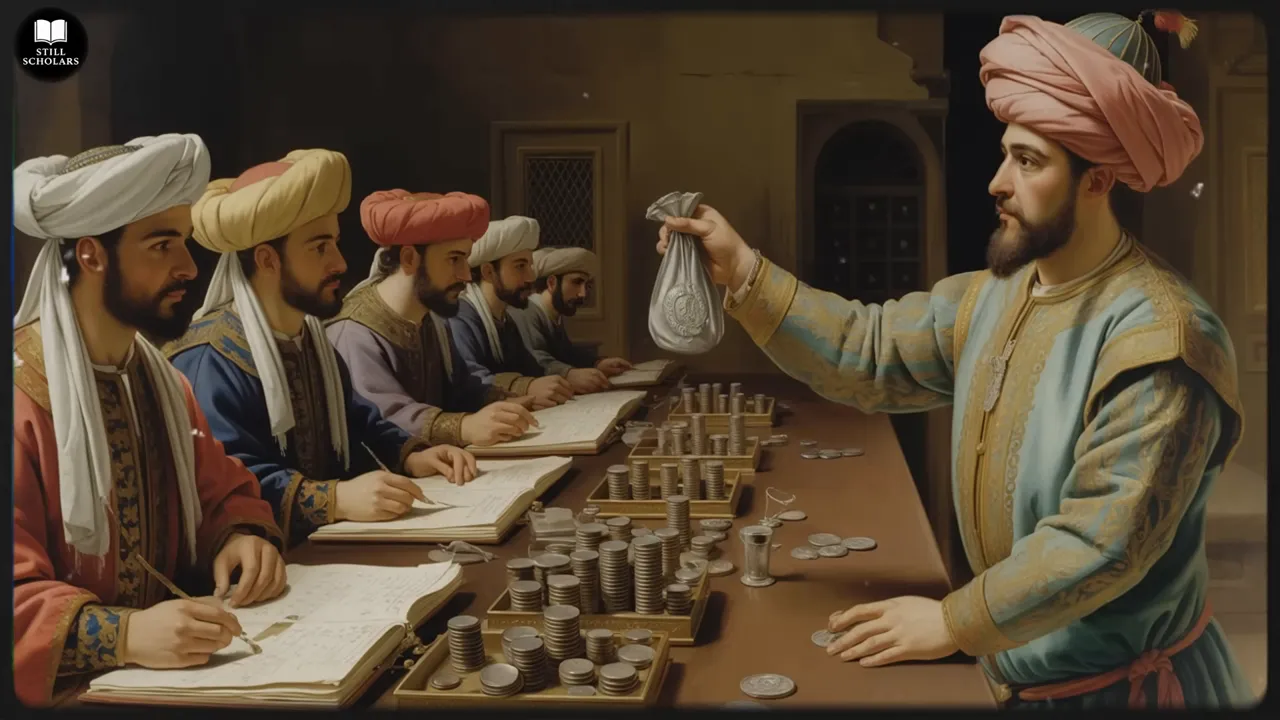
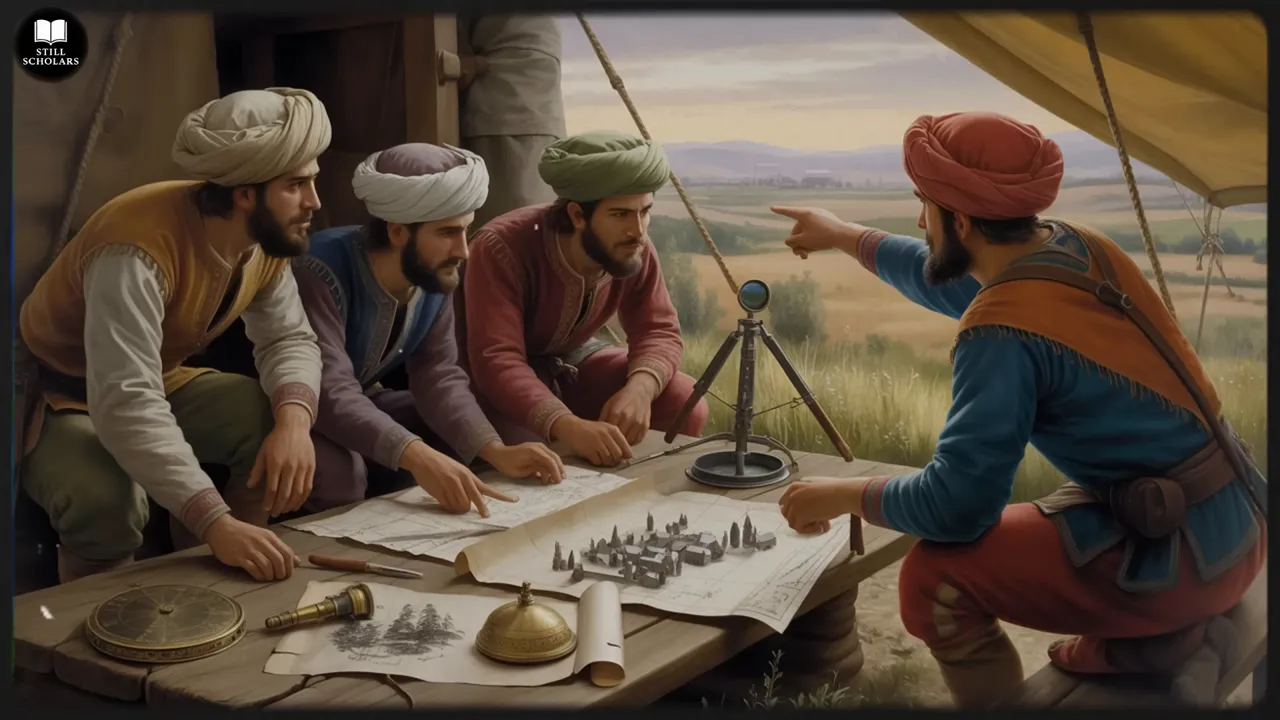
Beyond incentives for soldiers, systematic raids were organized expressly for procuring human property. These raids were not random; they followed seasonal calendars to minimize military risk while maximizing the number of captives. Intelligence networks scouted target regions, made lists of desirable villages, planned routes and timing so that raiding parties could extract the highest yield of captives with the lowest level of direct confrontation.
How Entire Communities Lived Under Seasonal Threat
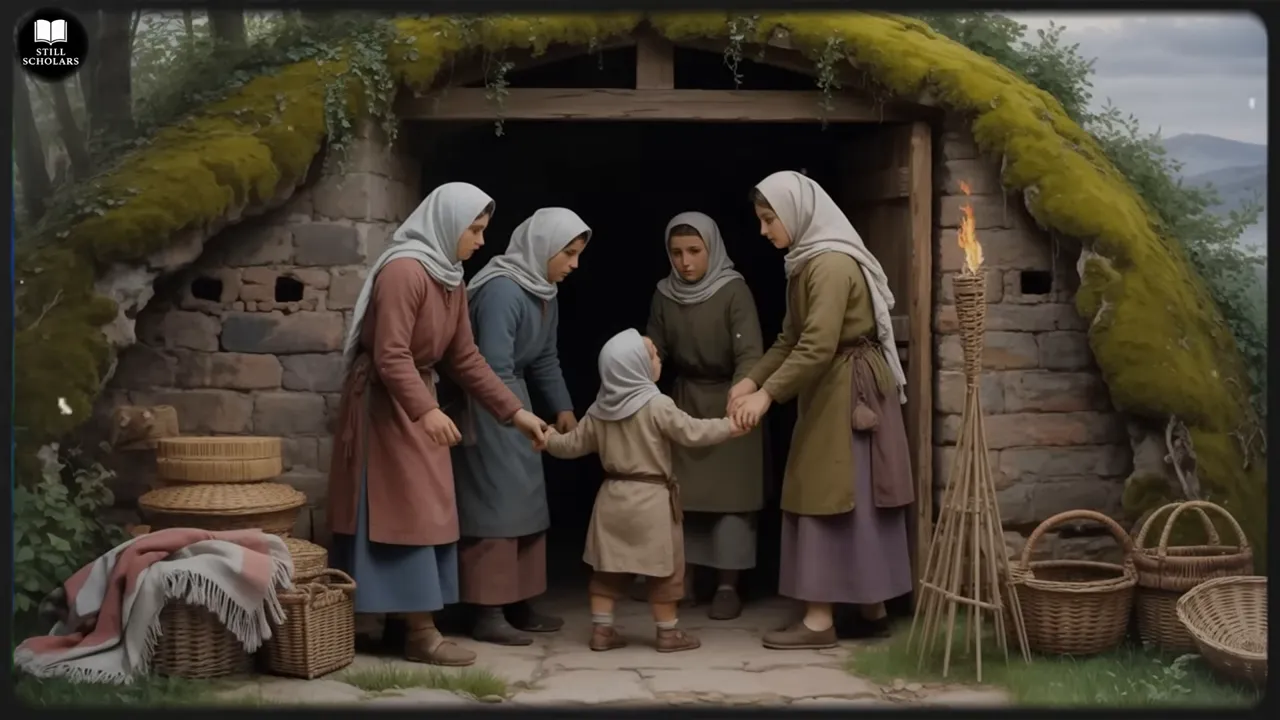
The long-term consequences of this pressure cannot be overstated. Agricultural rhythms, harvest schedules, and social life were organized around the threat of raids. Some communities tried to adapt: parents disfigured daughters to make them less appealing; families built underground hiding places and forest refuges; villages relocated temporarily during expected raid seasons. These strategies were desperate and often counterproductive, because they could provoke harsher reprisals if discovered.
When people scarred or maimed their own children to protect them, that self-inflicted violence reflects a society reshaped by the experience of threat. The Ottomans adapted as well, refining torture techniques to force information about hiding places and turning survival strategies into traps.
Cultural and Social Consequences: Trauma and Memory
The long reach of these policies created social changes and cultural practices that persisted long after Ottoman political power waned. Social norms around women's mobility, marriage practices, and honor developed in ways that reflected the need to protect women from abduction or exploitation. Oral histories and local traditions in regions affected by repeated raids tell of scars, altered marriage patterns, and institutional memories of mass kidnapping.
When an entire society organizes itself around the need to protect women from systematic sexual violence, that violence becomes structural: it is embedded in law, economics and everyday practice. The archival records I describe are but one side of this story; the other side is humbler and harder to find — the cultural practices, rituals and memory traces that reveal how communities coped, adapted, and sometimes survived.
Architecture of Control: Buildings, Registers, and Medicalization
The systemic nature of the exploitation emerges most clearly when we look at the physical and documentary infrastructure the empire built to sustain it. Standardized building plans for facilities across the empire indicate that certain architectural forms were replicated with minimal variation: small individual cells off corridors, central courtyards for exercise, guarded passages and controlled access points. The designs prioritized surveillance and management of reproductive labour.
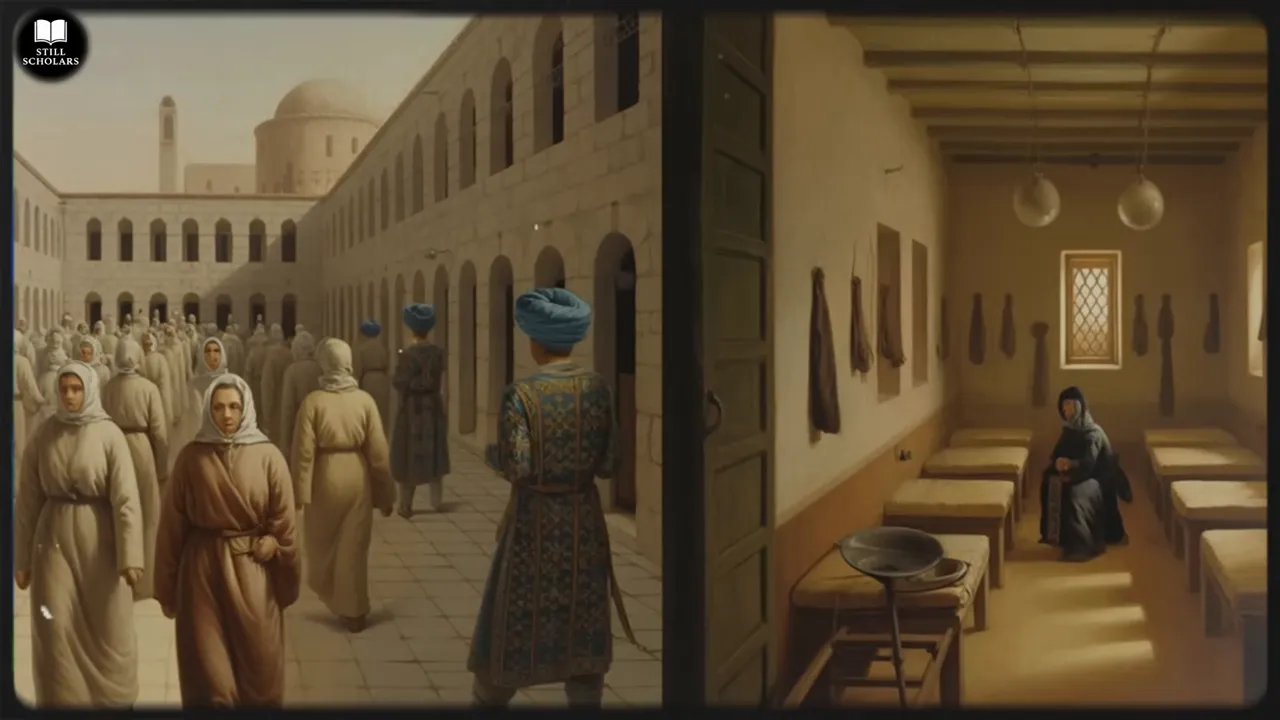
Medical records from these facilities survive in the archives. Physicians employed by the state recorded pregnancies, complications, and infant outcomes. Their innovations — techniques to raise pregnancy rates, reduce infant mortality — were not humanitarian. They were economic, designed to protect the empire’s investment in human capital. The records are clinical; they treat women as producers whose health and output can be optimized with the right interventions.
Sorting Women by Value
Women were sorted by administrative criteria: age, health, reproductive history and physical appearance. Those judged valuable for reproduction received comparatively better food, hygiene, and medical attention. Older women or those who failed to produce children were transferred to manual labor facilities where conditions were intentionally severe. The bureaucratic architecture of these systems made violence predictable and systematic — not arbitrary.
Conversion Centers, "Formation Programs," and the Erasure of Identity
Conversion centers operated as cultural re-engineering facilities. Their programs combined forced religious conversion, language instruction, and social programming intended to erase former cultural memories. Women were given new names — often Turkish names — and new identities were imposed through ritual and constant surveillance. The centers used a mix of humiliation, psychological manipulation and limited rewards to encourage compliance.
These programs were deliberately designed to produce socially useful subjects: obedient, linguistically assimilated, and reproductively productive. Records indicate that the centers kept registers of newly-assigned names, birth records of children, and subsequent placements. The erasure of names is a recurring theme in the archives — an administrative act that cuts the captives' ties to their pasts and rewrites their legal personhood in imperial terms.
The Dev Shurmi Levy and the Discarding of Gendered Futures
Historians are familiar with the devshirme — the levy that took Christian boys into Ottoman service and raised them for military and administrative roles. Less discussed but equally consequential was the accompaniment of girls to that system. The same legal framework that allowed boys to be taken as a levy also functioned to remove young girls from their families. But the life paths available to boys and girls were strikingly different.
While some boys eventually rose within Ottoman institutions, girls were routed into systems of sexual exploitation and reproductive labor. Records indicate extraordinarily high mortality rates among girls taken into tribute levies: roughly forty percent were recorded as dying within their first year of captivity in some registries I reviewed. Those who survived were often funneled into breeding programs, domestic service, or private ownership.
Why Gendered Differences Matter
The difference in outcomes for boys and girls highlights how the Ottoman system was not merely opportunistic but gendered: it systematically redirected female captives into sexual and reproductive roles that supported state and private households. The devshirme system is often studied as a mechanism of state-building; the contemporaneous practices involving girls reveal also how reproductive labor was incorporated into broader imperial strategies.
The Empire’s Calculations: Reproduction as Resource Management
Across multiple types of documents — military manuals, provincial reports, medical records, and market receipts — a cold arithmetic of human exploitation emerges. Officials recorded the optimal age for capture, estimated productive lifespans, calculated acceptable mortality rates and tracked pregnancy outputs. These documents treat women as assets whose value could be increased by management and whose loss could be absorbed within a budget.
This bureaucratic logic normalized and reproduced harm. Human suffering was not incidental; it was an input in administrative calculations that sought to maximize profit and control. Because incentives were built into the military and administrative apparatus, the practice perpetuated itself: commanders were rewarded for capturing high-value individuals, markets demanded a steady supply, and the state invested in the infrastructure necessary to sustain the system.
Regular Raids and the Seasonal Calendar of Kidnapping
Not all captures came from large-scale sieges. Regularly scheduled raids into neighboring territories were part of the empire’s operational toolkit. These raids were planned with the same strategic logic that informed campaigns of conquest: scouts mapped villages, identified the most desirable captives and planned routes to minimize confrontation while maximizing captures. They followed seasonal patterns, aimed at times when defenders were most vulnerable or when harvests promised abundant human targets.
For people in border regions and contested territories, the year came with seasons of hunger, planting, and fear. “Harvest time raids” could destroy a family's continuity overnight. The practical result was the institutionalization of fear and the restructuring of everyday life around the need to avoid abduction.
Everyday Adaptations: Scarring, Hiding, and Social Reengineering
Communities responded to systematic threat in painful ways. Parents sometimes scarred or deformed daughters to make them less desirable to captors. Families built underground chambers, secret caches and elaborate hiding systems. Entire social rituals — marrying off girls young, limiting women's movement, community watch systems — evolved as survival strategies. These adaptations were costly: they inflicted permanent bodily and social harm in the name of protection.
Sometimes these survival strategies failed. Ottoman forces adapted as well, using torture and coercion to locate hiding places and forcing communities to betray those they hoped to protect. The dynamic made trust within communities precarious and often destroyed the social fabric that extended beyond generation.
Long-Term Legacy: Culture, Memory, and the Need for Confrontation
What I argue in the video and expand here is not merely that atrocities occurred — atrocities of war are, sadly, common across history — but that the Ottoman Empire developed institutional and legal mechanisms that normalized and industrialized an assault on women’s bodies and families. Those mechanisms left archival traces: ledgers, transports receipts, conversion registers, medical logs and architectural plans that together form a bureaucratic portrait of systematic exploitation.
The cultural effects endured. Where entire regions developed customs and social norms to mitigate the constant threat of abduction, we can see the persistence of trauma across generations. Oral histories, ethnographic accounts and local traditions sometimes reflect memories of these practices even when national narratives have marginalized them.
Evidence and the Archives: What We Know and Why It Matters
The claims I present rely on two kinds of sources: contemporary narrative accounts (often from the communities on the receiving end of conquest) and Ottoman administrative documents preserved in provincial and central archives. The narratives tell us about trauma, pain and memory. The administrative documents tell a complementary story: the empire documented these practices because they were part of governance and commerce.
Examples of archival categories include:
- Ships’ manifests listing goods and human cargo
- Military dispatches and manuals describing processing procedures
- Market price lists and bills of sale
- Conversion center registers documenting assigned names and training
- Medical logs tracking pregnancies and infant outcomes in state facilities
- Court records adjudicating disputes over claimed "property"
Reading these documents in combination allows historians to move beyond anecdote and to reconstruct the institutional logic that made such practices feasible and, in the eyes of their architects, efficient.
Ethical Stakes: Remembering and Researching Difficult Histories
Confronting this documentary record raises difficult ethical questions. How do we tell these histories without turning victims into mere data points? How do we balance sober administrative evidence with sensitivity to personal suffering? The aim must be to recover both the systemic mechanisms and the human stories within them — to respect the individuals while acknowledging the scope of institutional power that made their suffering routine.
Working with the archives also means confronting gaps and biases. Administrative documents are often incomplete, and narrative accounts may be shaped by trauma or polemic. Together, however, they allow a more complete picture than either set could provide alone. The archives demand historians willing to read bureaucratic language as testimony and to pair it with lived experience described in other sources.
Conclusion: Archives Waiting — An Invitation to Confrontation
My central claim is simple and stark: the Ottoman Empire did not only conquer territory; it developed administrative, legal and economic systems that weaponized human bodies — particularly women’s bodies — as instruments of state power. These practices were not the random cruelties of war. They were planned, documented, and implemented with bureaucratic precision. The archival traces exist precisely because the state treated these actions as governance and commerce.
That history is uncomfortable because it challenges the sanitized narratives of imperial expansion that emphasize architecture, diplomacy and military prowess while omitting the everyday machinery of exploitation. The archives are waiting for historians who will turn away from the romance of empire and instead examine the records that show how power normalized the unthinkable.
We remember the Blue Mosque and the architectural achievements of the Ottomans — and those memories matter — but they are incomplete if they do not also reckon with the systematic practices that shaped millions of lives. Confronting this past is both a scholarly obligation and a moral one.

Further Reading and Questions for Research
The archival threads I draw on intersect with many topics that invite deeper scholarship:
- Comparative studies of slavery and forced migration across empires.
- Gendered analyses of conquest and how imperial institutions shaped women’s lives.
- Archaeological investigations of conversion centers and transport infrastructure.
- Micro-histories of communities subject to seasonal raids and their survival strategies.
- Legal histories tracing how property law and war-time statutes normalized exploitation.
These avenues of study are not merely academic. They help us understand how bureaucratic systems can normalize violence and how memory and culture preserve responses to long-term threats. If you are a student or researcher interested in this topic, the Ottoman provincial and central archives contain registers, logs and court records that are indispensable for reconstructing the administrative anatomy of conquest.
Final Thoughts
When we imagine history we often reduce it to battles, treaties and great personalities. But much of the machinery of empire operates at a different scale: paperwork, markets, buildings and protocols that turn human lives into resources. Understanding that machinery changes how we remember the past and how we think about the long-term legacies of power.
If this account prompts a single conclusion, it is this: civilized institutions can, under certain incentives and legal framings, normalize the unthinkable. The Ottoman archives show this with an uncomfortable clarity. Our job as readers, historians and citizens is to read those records carefully, to amplify the voices that the ledgers erase, and to insist that historical memory include both monuments and the human costs that built them.
If you've found this examination useful or provocative, I encourage you to seek original archival sources, read widely across narratives and administrative records, and keep asking difficult questions. The archives are there; the work of confronting the past is ongoing.



 Posts
Posts


0 Comments