

In this long-form exploration I revisit six of the most shocking and instructive cases of women convicted of killing in Scotland. From the dimly lit flats of South Ayrshire to long-cold riverside murders reopened after decades, these stories are grim, complicated and full of uncomfortable truths. As the creators of the original investigation, we aim not merely to recount headlines, but to understand motive, context and consequence — and to draw practical lessons about prevention, detection and the limits of mercy in the face of brutality.
Each case below is presented in chronological order as I originally narrated them: the details of what happened, the police and court responses, the psychological portrait painted in evidence and reporting, and the broader questions each conviction raises about our criminal justice system, social services and the human capacity for violence when jealousy, addiction, greed or rage take hold.

Contents
- Michelle Ramage and the death of Susan Turner (Ayr, March 2023)
- Elizabeth Sweeney and the death of Neil Jolly (Aberdeen, June 2023)
- Donna Marie Brand and the murder of Caroline Glashan (1996; conviction 2023)
- Dion (Dionne) Christy and the death of Jevin Haig (Falkirk, June 2022)
- Avril Jones and the disappearance of Margaret Fleming (Inverkip, 1999; inquiry 2019)
- Nicole Early (now Kobe) and the murder of Anne Gray (Edinburgh, 2008)
1. Michelle Ramage — The murder of Susan Turner (Ayr, March 2023)
One of the most harrowing episodes I examined involved the brutal beating and mutilation of Susan Turner in a flat in Ayr between the 25th and 26th of March, 2023. The scale and savagery of the injuries — later described by prosecutors as torture — shocked Scotland and reignited debates about domestic jealousy, coordinated violence and the role of bystanders.
Susan Turner, a mother of three in her early 40s, had been texting and visiting a man named Jason Bell, who was described in court records as the partner or lover of 43-year-old Michelle Ramage. Friends painted Susan as kind but vulnerable; her only apparent crime was becoming enmeshed in a relationship that aroused obsessive jealousy.
Ramage had an extensive criminal record — 37 prior convictions, including abduction and serious assault — and a history of abusive relationships that left her with post-traumatic stress disorder. Her defense later argued that past trauma was part of her life story, a mitigating factor. The prosecution countered that mental ill-health does not excuse sustained sadistic violence.
Between those two nights in March the simmering rage exploded. Alongside co-accused Ryan Hill, Ramage allegedly bludgeoned Susan with mugs, a machete, a golf club and even a radio. She was stabbed with scissors; a dressing-gown cord was used to strangle her; her hair was ripped out and her body scored with a blade. Forensic accounts recorded more than 130 separate injuries — wounds deliberately targeted to humiliate and dehumanize.
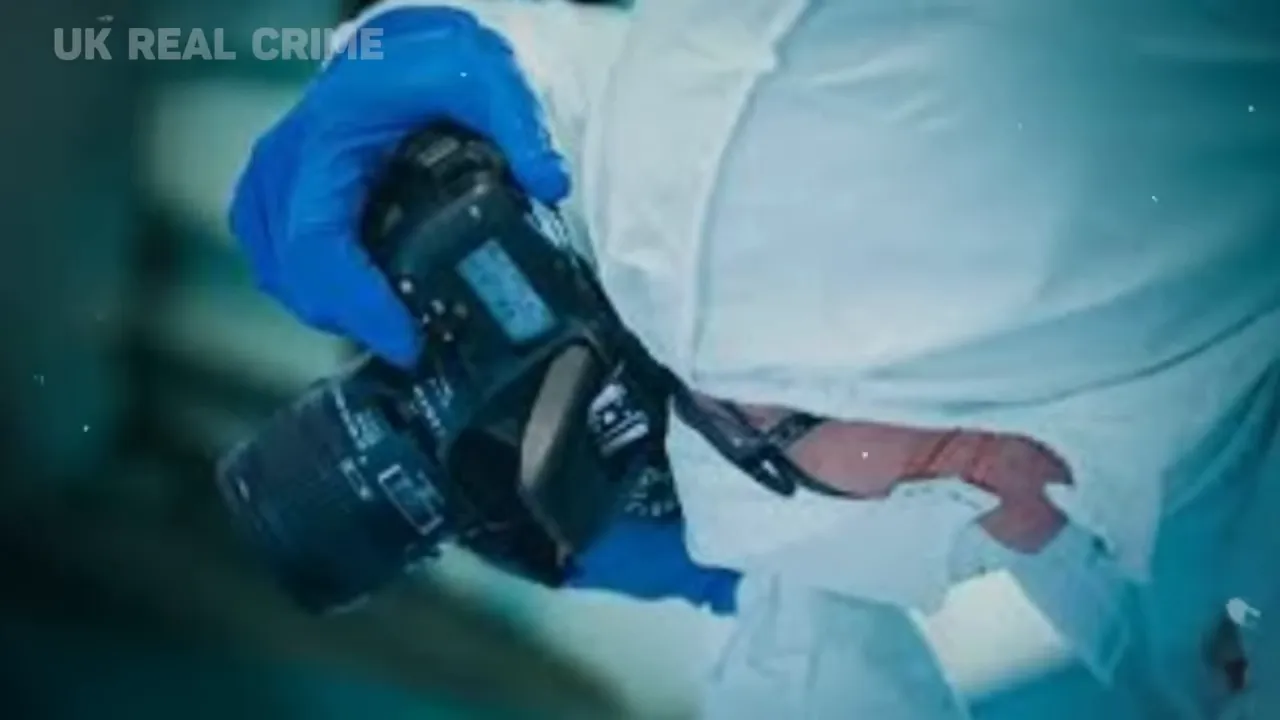
Neighbors later spoke of muffled screams. Jason Bell's brother remembered Bell acting like a "nervous wreck" and warning, "they are going to end up murdering her." Police forced entry on 26 March and found the flat thick with the smell of blood; Susan lay motionless, tortured beyond recognition in places. The investigation focused swiftly on Ramage and Hill, supported by witness testimony and forensic evidence which undermined attempts to shift blame.
Lord Mulholland, sentencing: "This assault was brutal and cowardly... akin to torture... designed to disfigure and demean Susan Turner."
Ramage pleaded guilty to murder on 31 January 2025, midway through her trial. On 13 March 2025 Lord Mulholland sentenced her to life imprisonment with a minimum term of 22 years (reduced from 24 only because of the timing of the plea). Hill also faced trial and sentencing, but it was Ramage's name that became tied to a form of cold, jealous violence that seemed designed to punish Susan not only by killing her but by violating the very idea of womanhood.
The consequences for Susan's children were severe and immediate: a 9-year-old, a 14-year-old and a 23-year-old left without a mother. Detective Inspector Keith Runcsey offered public condolences, acknowledging the family's loss and the community's shock. Beyond empathy, the case forced a national conversation about how jealousy can escalate, about early warning signs of controlling behaviour, and about how people in vulnerable social circles might be protected.
Analysis: Why this case matters
There are layers here that make the case different from a one-off, impulsive killing. The forensic picture showed not a single, panic-driven act but a sustained campaign of degradation: repeated blows, mutilation and humiliation. Where an isolated act of violence might be reactively prosecuted as manslaughter in some circumstances, the prosecution framed this as a premeditated "joint enterprise" in torture and murder.
- Jealousy as a motivating factor: Jealousy is often portrayed in popular culture as a private, emotional issue. Cases like this show how it can metastasize into a deliberate, destructive project against the object of envy.
- Co-offending dynamics: The involvement of more than one attacker changes the psychology of the act — shared rage can escalate conduct beyond what either would do alone.
- Victim vulnerability and visibility: Susan's social situation — her friendships, her involvement with Bell — placed her within a closed environment where neighbours heard screams but did not intervene successfully.
Those lessons land uneasily. They force us to ask how social services, neighbours and informal networks might be trained to spot and report escalating threats, even when they do not look like traditional domestic abuse cases.
2. Elizabeth Sweeney — The murder of Neil Jolly (Aberdeen, June 2023)
Aberdeen's granite streets rarely produce headlines as visceral as this. Elizabeth Sweeney, 36, stood in the High Court of Aberdeen accused and ultimately convicted of murdering 49-year-old Neil Jolly. Their relationship blurred client and partner, sex worker and host; it was defined by addiction and violence.
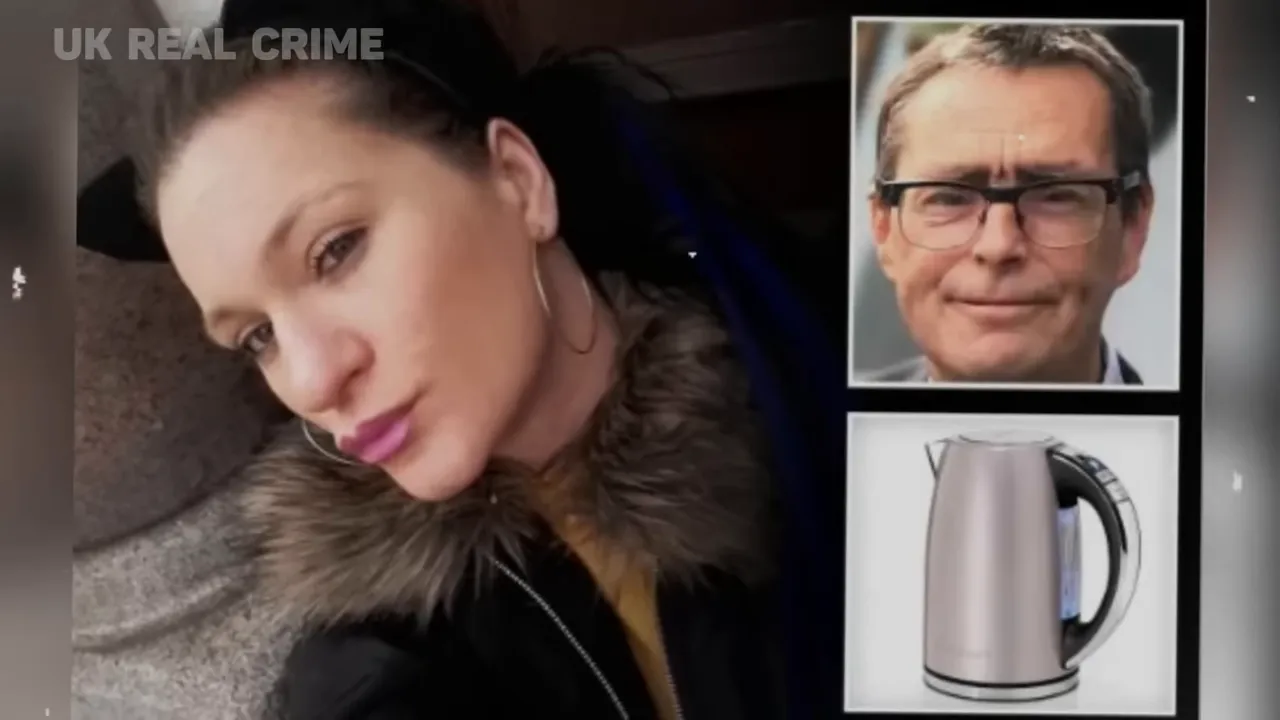
Jolly — a father of three described by family as quiet — allowed Sweeney to use his flat when she was working. Reports showed that his face bore bruises and black eyes in the weeks leading up to his death; he admitted they were due to assaults by Sweeney. This built a pattern of escalating domestic violence that prosecutors argued culminated in the fatal attack of June 22–23, 2023.
The assault itself was prolonged and brutal. Forensic evidence documented more than 70 blunt-force injuries to the head and torso. Sweeney had repeatedly struck Jolly with fists and a household kettle — so many blows and such force that experts compared his injuries to those seen in high-speed road accidents or falls from height. After the fatal beating, Sweeney did not call for help. Instead she tried to conceal what had happened: she washed his body in the shower, wrapped it in a duvet cover and scrubbed blood from the kettle, carpets and other surfaces.
For three days Jolly's body remained in the flat. During that interval Sweeney was observed outside the building, covered in blood and seeking drugs; she spent hours drinking with another man. Only on the 26th did she call police from a telephone box, claiming she had woken to Jolly raping her and had battered him in self-defence. When officers forced entry they found Jolly dead in the bathroom. The jury rejected Sweeney's account, concluding that her actions before, during and after the killing showed planning to conceal rather than a sudden defensive act.
Lord Andrew Miller, sentencing: "This was a prolonged and sustained assault... the injuries were of a severity comparable to catastrophic accidents. Your conduct after the attack magnified the grief of his family."
Sweeney was convicted of murder in February 2025 and sentenced on 31 March 2025 to life imprisonment with a minimum term of 18 years. The reaction from Jolly’s family — devastated and angry — highlighted another feature of these cases: the double tragedy of violent death and of a body left unattended in a flat for days.
Key themes and implications
This case challenges easy assumptions about gender and domestic abuse. Most discussions focus on male-on-female violence, but the statistics and cases show that men can be victims of severe intimate partner violence too. The debate that followed Sweeney’s sentence — on social media and public forums — was twofold: some questioned whether 18 years was sufficient given the brutality; others used the case to argue that male victims are, in some contexts, overlooked by services and by public perception.
- Domestic violence in non-traditional relationships: The complexities of transactional sex, addiction and unstable housing create domestic environments where violence is more likely and less visible.
- Post-offence conduct as evidence: The cleaning, covering and concealment of the body were persuasive to jurors because they suggested consciousness of wrongdoing and an intent to avoid detection.
- Intersection with public services: When addictions and sex work are factors, the lines between victim and offender can blur in forensic and psychological analysis, but accountability remains central.
As with the Ramage case, Sweeney's history of being abused herself was raised in mitigation. The court acknowledged the background but found that it did not justify the level of violence inflicted nor the attempts at concealment afterward. The case forces reform-minded observers to ask: how do we better identify and protect people in chaotic, drug-affected relationships before they become fatal?
3. Donna Marie Brand — The murder of Caroline Glashan (Renton/Bonhill, August 1996; convictions 2023)
Some crimes haunt communities for decades. The murder of 14-year-old Caroline (sometimes written Caroline Glashan in reporting) on 24–25 August 1996 is one such case: a cold-case that was reopened, reinvestigated and finally prosecuted with convictions more than 27 years later.
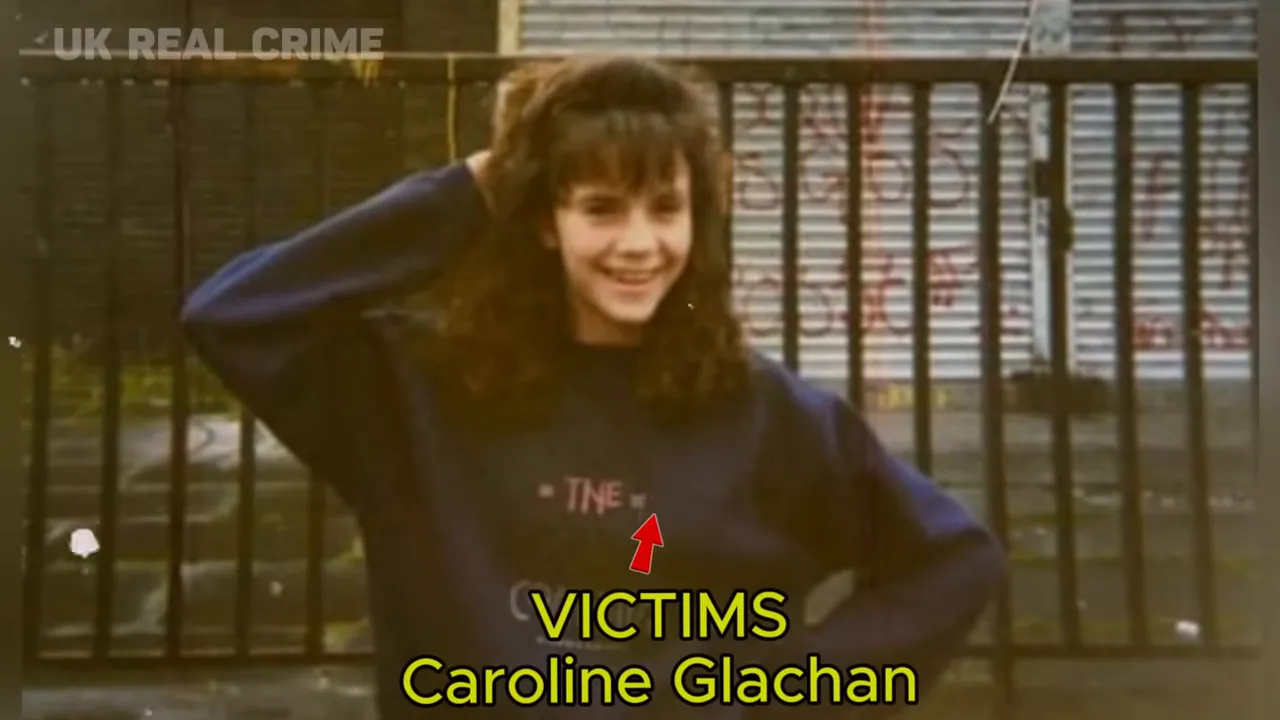
Donna Marie Brand was 17 at the time. Pregnant with the child of Robert O'Brien, Brand was consumed by jealousy when she learned O'Brien was intimately involved with 14-year-old Caroline. On the night Caroline went to meet O'Brien near the Black Bridge by the River Leven, she walked into a trap. O'Brien, Brand and Andrew Kelly confronted her. Witnesses later described a ferocious assault: shouting, swearing, repeated punching and kicking, and beating Caroline with bricks or similar heavy objects.
Caroline’s body was discovered the following afternoon. The case immediately gripped Scotland — it featured on BBC Crimewatch and led to widespread press appeals — but despite the attention, the investigation stalled. For years Brand, O'Brien and Kelly gave denials and the case went cold. The killers resumed lives with family and work while the victim’s grieving mother waited for justice.
Everything changed when renewed investigatory energy returned to the case in 2019. Advances in forensic science, plus the cooperation of new witnesses, slowly tightened the net. A neighbour's recollection and even testimony from someone who had been a small child at the time dismantled alibis. The trial in 2023–2024 culminated with all three defendants convicted of murder in December 2023 and sentenced the following April.
Lord Braide, sentencing: "This was a brutal, depraved and above all wicked murder."
Brand, O'Brien and Kelly each received life sentences; Brand received a minimum of 17 years (reflecting her youth and perceived lesser role), O'Brien 22 and Kelly 18. For Caroline’s mother, Margaret McKeach, the verdicts were relief and not the full closure she needed, but they were a long-sought public acknowledgement of wrongdoing. "This is a day we never thought we would see," she said outside court. "Caroline can now rest in peace. It's not closure, it's justice."
Lessons from a cold case
Cold-case work often requires the slow accumulation of tiny inconsistencies and the use of new forensic tools to reinterpret old evidence. The Brand case underlines a number of important truths:
- Forensics and persistence matter: Technological improvements and dogged investigators can resurrect long-dormant leads.
- Community memory: Witnesses who were previously silent, or who re-evaluate what they once thought trivial, can change the course of a case decades later.
- Jealousy, peer pressure and youth vulnerability: Teenage offenders are not immune from violent intent; immature emotional regulation and group dynamics can produce extreme results.
Donna Brand's psychological portrait was of a young woman drawn into violence by jealousy, drugs and older, manipulative partners. Her age explains part of the sentence mitigation, but the court concluded that planning and intent — not impulsive youth — had played a central role in Caroline’s murder.
4. Dion (Dionne) Christy — Culpable homicide in the death of Jevin Haig (Falkirk, June 2022)
I have often found that the most publicly discussed murders are those where the defendant's public image clashes with the private reality. Dion Christy, a 21-year-old mother with a large social-media profile and aspirational lifestyle photos, presented such a contrast. Her case exposes how curated online life can obscure volatile private relationships.

Christy had previously worked as a hairdresser and posted glamorous images from holidays and nights out. Privately, she lived with Jevin Haig, 21, a known drug dealer. Their relationship was volatile: texts one day before the killing included violent threats from both sides. According to evidence shown at trial, Haig told Christy he was losing out on deals; she replied with a text that read, "You know what is dead? You." Competing claims of threats, slashing of jackets and prior stabbings in the leg by Christy set a combustible context.
On the night of 26 June 2022 a struggle in the bedroom ended with Haig suffering a chest wound from a 12-inch hunting knife which punctured the heart. Forensic evidence indicated the wound would likely have been fatal almost immediately, with experts saying that even in an operating theatre it might not have been survivable.

Christy's actions after the injury were central to legal debate. Prosecutors argued she delayed calling for help — making other calls first and asking neighbours to contact her mother — and when she eventually called 999 she downplayed the situation, calling Haig merely a "friend" and saying he did not need an ambulance. Police found Christy's DNA and fingerprints on the weapon; she initially told officers the knife had been pulled by Haig and implied he had stabbed himself.
Her defence painted a scenario of self-defence: Christy claimed Haig had threatened her unborn child by pressing the knife to her stomach and that she thrust back in a reflexive action that accidentally stabbed him. The jury accepted that she had not intended murder but instead convicted her of culpable homicide — the Scottish equivalent of manslaughter — concluding she had acted under provocation. The verdict came on 17 March 2025.
Lady Poole, sentencing: "Your actions ended the life of a young man and left his family in deep grief. That grief is lifelong."
On 7 May 2025 Christy was sentenced to eight and a half years in prison. The public reaction was complex and often angry: Haig's mother described her as a monster and expressed relief at the sentence; many on social media were outraged by Christy's previous online activity while awaiting trial — holiday selfies and posts which they saw as a lack of remorse. That juxtaposition between a glamorous online persona and a troubled private life inflamed debate about how defendants are allowed to behave publicly before conviction.
The courtroom and cultural questions
Christy's case raises several intersecting issues:
- Provocation and culpability: Scottish law allows for reduced culpability where a killing arises from provocation, but the limits of that doctrine are contested in violent intimate contexts.
- Social media and pre-trial behaviour: The capacity for defendants to curate a public image while under investigation forces courts and the public to wrestle with what online behaviour reveals about remorse and danger.
- Pregnancy, motherhood and sentencing: Judges and juries are sensitive to the defendant's role as a mother and to the loss of an unborn child, and those factors often appear during mitigation.
Ultimately the jurors decided that, while Christy did not commit murder in the juridical sense, she caused a death through violent conduct that cannot be excused by panic or accident alone. The sentence reflects the court's attempt to weigh intention, provocation and the tragic consequences for the deceased family.
5. Avril Jones — The disappearance and presumed murder of Margaret Fleming (Inverkip, 1999; conviction 2019)
Not all of the cases I discuss are headline killings discovered on the street. The Avril Jones story is a decades-long saga of betrayal, fraud and systemic failure that reads like an indictment of complacency. Jones was entrusted to care for a vulnerable teenager, Margaret Fleming, after the death of Margaret's father in 1995. The last independent sighting of Margaret was on 17 December 1999; after that, she vanished.

Instead of reporting a disappearance, Avril Jones and her partner Edward Kearney wove an elaborate narrative intended to convince neighbours, state officials and benefit authorities that Margaret was alive and in their care. They claimed she had run away with travellers, that she was living in England under a false passport, or that she worked abroad. None of these stories were true. The motive exposed by prosecutors was simple: money. From 2000 until 2016 Jones fraudulently claimed more than £182,000 in disability benefits in Margaret's name.
That sum bought an extraordinary degree of invisibility. Social services had not seen Margaret in nearly 17 years. Only when benefit rules changed and new documentation was required did officials demand proof of Margaret's existence. No evidence could be provided; a missing-person investigation was launched, and detectives began to unravel years of farcical explanations. Searches of Seacroft turned up no trace of Margaret; despite exhaustive efforts her body has never been found.
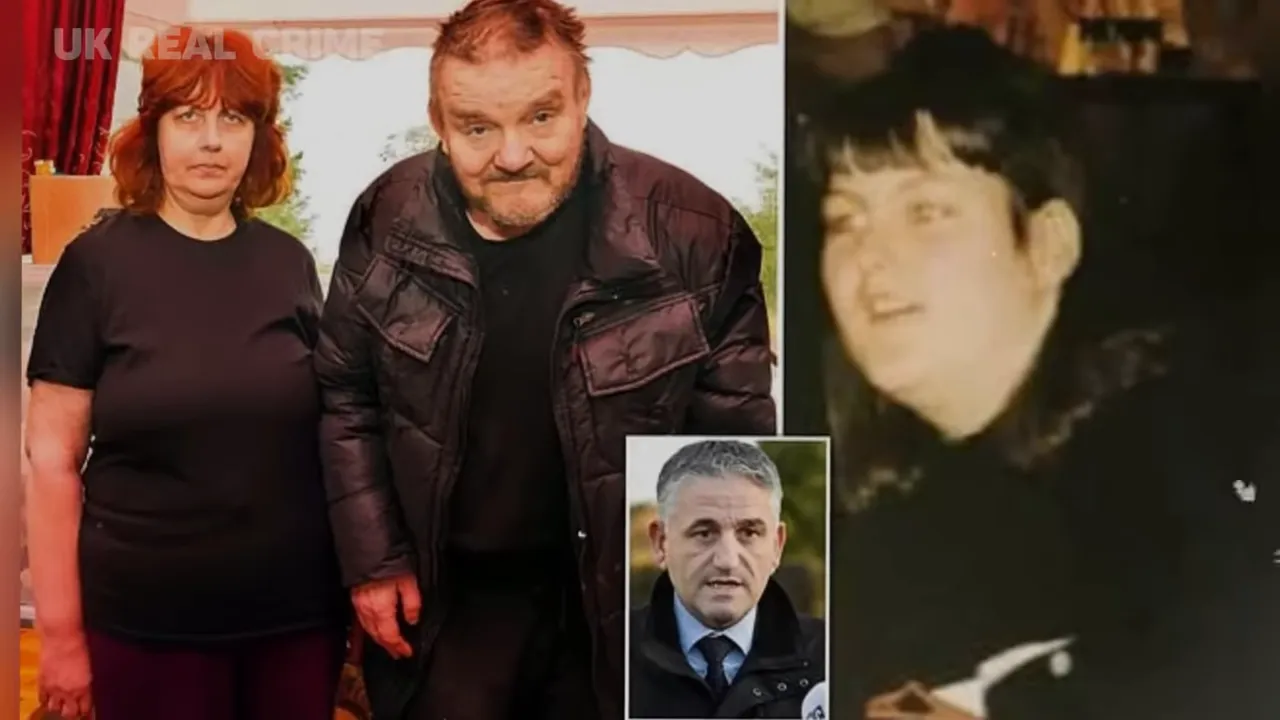
Jones and Kearney were tried in 2019. Both denied murder and maintained that Margaret was alive; the jury concluded otherwise. Lord Matthews called the crime a "gross betrayal of trust, motivated by financial gain" and sentenced both to life imprisonment with minimum terms of 14 years. Kearney later died in custody. Jones was also ordered to repay the stolen benefits.
System failures and moral ruin
This case stands apart from the others because it is less about an explosive moment of rage and more about a long, methodical betrayal of duty. Key questions arise:
- How was a vulnerable child allowed to disappear without follow-up? The case highlighted gaps in social-services oversight and in the way long-term care arrangements were monitored.
- How did financial incentives distort morality? The fraudulent benefits scheme allowed Jones to profit from Margaret's absence — turning caregiving into a commodity and erasing a person.
- Why does the absence of a body complicate justice? Convictions in "no-body" cases rely heavily on circumstantial evidence. The jury in 2019 accepted the pattern of lies and deceit as proof beyond a reasonable doubt that Margaret had been killed and hidden.
Detective Superintendent Paul Livingstone made an emotional plea after the convictions: "Do the decent thing, let Margaret's family know what happened to her so she can be given a proper funeral." Jones has never disclosed the truth. For the Fleming family — marginalised, betrayed and bereft of a grave — the legal victory does little to fill the empty place left by a vanished daughter.
6. Nicole Early (Kobe) — The murder of Anne Gray (Edinburgh, November 2008)
When a trivial dispute over a cigarette and a few pounds ends in a catastrophic act of violence, the result is a communal shock: that such disproportionate force can erupt from a petty argument. That is the essence of the case involving Nicole Early, then aged 16, who murdered 63-year-old Anne Gray in November 2008.
Neighbours described Early as troubled and shaped by a chaotic upbringing and substance misuse. On 14 November 2008 Mrs. Gray — a family friend who lived near Early's grandmother — had borrowed a cigarette from Nicole and promised two in return. The cigarette and a disputed £5 for shopping were the backdrop to a cold, lethal assault.
Inside Mrs. Gray's home Early pushed her to the ground and then repeatedly stamped on her head and body. Mrs. Gray suffered catastrophic injuries including a fractured jaw, a broken cheekbone and a snapped bone in the neck. The cause of death was a fatal head injury. The attack was sustained and merciless; Early admitted her actions yet appeared to show little comprehension of the human devastation she had caused.
In January 2010 Early pleaded guilty to murder and in February 2010 received a life sentence with a minimum term of 14 years. The presiding judge told her plainly, "This was a senseless and vicious killing. Violence is part of your makeup." Those words — that violence was intrinsic to her personality — were chilling, because they implied an enduring risk rather than a temporary failing.
Life after sentencing: prison behaviour and identity complexities
Early's story does not end at the dock. In later years Early began living as a trans man under the name Kobe; he also developed a violent and notorious prison record that included assaults on inmates and staff, disturbing letters praising mass murderers and threats to outsiders. A parole hearing in 2021 was cancelled due to repeated attacks inside custody.
Early's behaviour in prison and the complexities of gender identity placement raised difficult policy questions for prison authorities: how to ensure safety for staff and other prisoners while balancing claims about gender identity and lawful placement. The case exposed an institutional quandary: risk assessment for violent offenders must attempt to be gender-neutral while also accommodating evolving understandings of identity and vulnerability.
- Early intervention is essential: Had Early’s early childhood and behavioural issues been addressed differently, could a different trajectory have been possible?
- Prison management complexities: Violent offenders who change gender identity while incarcerated present unique policy and safety dilemmas that prisons must plan for.
- Victim-family sorrow: Mrs. Gray's daughters called the 14-year minimum "a joke" — a raw, public expression of the grief families feel when they calculate the years of incarceration against their loved one's lost lifetime.
Cross-cutting themes: What these cases tell us about violence, gender and justice
When I look across these six cases — spanning decades and different circumstances — common threads emerge. They hold lessons for law enforcement, for social care providers, for communities and for anyone who wants to understand how and why close relationships sometimes become the site of deadly violence.
1. Motives are rarely simple
Greed, jealousy, addiction, fear, shame and the desire to control are all present in these stories. In some cases (Ramage, Brand, Christy), jealousy and relationship dynamics were the immediate catalysts. In Jones's case, financial greed and a willingness to sustain false narratives drove the crime. Sweeney’s case featured the corrosive mix of addiction and violence. Early's attack was an explosion of adolescent rage. Understanding motive is less about assigning a single cause than about seeing how multiple pressures intersect.
2. Gendered assumptions mislead
There’s a tendency to assume that women are less likely to commit certain kinds of violence or that female-perpetrated homicide follows predictable patterns. These cases make clear that women can and do commit forms of violence that are calculated, prolonged and cruel. They also remind us that men can be victims of intimate partner violence. A better understanding of violent dynamics must be gender-inclusive.
3. Patterns of behaviour matter
Repeated small acts — threats, slashing jackets, shouting, controlling text messages, or repeated assaults — are often the prelude to larger violence. For investigators and for those supporting at-risk individuals, the accumulation of minor offenses and personal complaints should be taken seriously as potential red flags.
4. Systems failings have real consequences
Avril Jones’s case is the starkest example: a vulnerable teenager disappeared and nobody effectively checked for nearly two decades. The reasons include underfunded social services, bureaucratic assumptions about transience, and a benefits system that, until 2016, accepted long-term claims without fresh verification. Cold cases like Caroline's show how time erodes evidence but also how persistence can eventually deliver justice.
5. The role of post-offence behaviour in prosecution
When defendants clean up scenes, lie to police, delay calls for help, or attempt to conceal bodies, those actions strongly influence jury perceptions of culpability. The Sweeney and Christy cases both hinged in part on what the accused did after the act: concealment and delays can transform a defence narrative of panic into a prosecution narrative of consciousness of guilt.
Prevention, detection and support: Practical takeaways
Beyond legal outcomes and media commentary, these cases compel us to ask what ordinary people and institutions can do differently. Here are practical measures drawn from the cases I covered.
Community vigilance and early reporting
- Discourage normalisation of domestic disturbances: Neighbours often hear muffled screams or see bruises. Timely reporting (to police or local support agencies) can prevent escalation.
- Encourage confidential support for victims: Helplines and community charity services should be accessible even for non-traditional victims (men, sex workers, substance users).
Social services and benefit verification
- Regular, in-person checks: Long-term benefit claims tied to a specific individual's welfare should be audited periodically by social workers or trained welfare officers.
- Signal-sharing between agencies: Housing, benefits, health and social care departments must have efficient, lawful mechanisms to flag unusual patterns (e.g. absence of a beneficiary for many years).
Policing and forensics
- Cold-case resources: Invest in dedicated teams that revisit unsolved violent crimes using modern forensic techniques.
- Training on co-offending dynamics: Police should be trained to recognise when groups of people act together and how group psychology escalates violence.
Mental health and addiction services
- Tailored interventions: For people with histories of victimisation and trauma, targeted therapeutic interventions can reduce the future risk of reoffending.
- Dual-diagnosis pathways: Where addiction and violence co-exist, integrated services for both issues are essential.
Legal and ethical reflections
As an investigator and storyteller, I also reflect on the legal balances these cases require. The courts must weigh personal histories of abuse against the severity of crimes committed. Mitigation can and should be considered, but the public expects protections and accountability.
Sentencing debates — whether 14, 18 or 22 years is enough — reveal no simple consensus. Families and communities measure punishment against loss. Judges measure it against precedent, proportionality and the aims of sentencing: punishment, deterrence, public protection and rehabilitation. Each verdict leaves some parties satisfied and others feeling the system has failed them.
On "no-body" convictions
Convicting without a body, as in the Margaret Fleming case, depends on the accumulation of circumstantial evidence. It is not easy, but it is possible if prosecutors can establish motive, opportunity and consistent lies or concealment. These cases test juries' ability to reason from pattern rather than a single smoking gun.
On female offenders and prison management
The Kobe (Early) story also highlights the realities of long-term incarceration: prisoners can change identity claims, become more violent behind bars or continue destructive behaviour. Prison systems must balance legitimate protections (including for transgender prisoners) with the imperative to manage dangerous behaviour and protect all who live and work in custodial settings.
Voices from the families: The human cost
Across every case the families' voices are the ones that matter most yet are heard least in sensational headlines. The children of Susan Turner, the mother of Caroline, the relatives of Anne Gray and the family of Neil Jolly all describe the same catalogue of pain: a life taken, a family fractured, anniversaries that reopen wounds and the difficulty of living with unanswered questions.
When juries deliver convictions, remorse is rare and partial. Sentences cannot resurrect the dead. They can, however, provide a public accounting and, occasionally, closure. That is never complete; sentences are a legal response to moral horror, not a healing balm.
Final reflections: Why I keep telling these stories
I return to cases like these because they illuminate the human condition at its most fragile — and at its most violent. They are cautionary tales about how rage, greed, addiction and neglect can produce disaster. They are also stories of forensic persistence, of cold-case detectives who refuse to accept silence, and of communities that sometimes rally to insist on answers.
Most of all, these cases ask uncomfortable questions: how well do we know the people we invite into our homes? When jealous words turn to threats, when injuries are normalised as "just the way they fight," who will step in? The legal outcomes in these six stories — from a 22-year minimum term for a torture murder to an 8½-year sentence for culpable homicide — reveal how our courts attempt to measure harm, intent and culpability in tragic circumstances.
There is no easy moral in any of this. But there are actionable steps: take threats seriously, invest in social safety nets, fund cold-case units, and educate communities that reporting is a protective act, not a betrayal. If you are worried about someone — a friend, a neighbour, or even yourself — reach out to local support services. Early intervention saves lives.

Resources and helplines
If you or someone you know needs support related to domestic violence or abuse, please contact local services. In Scotland, organisations like Victim Support Scotland, Scottish Women's Aid and local police non-emergency lines can provide immediate help. For addiction and mental-health support, NHS local services and third-sector charities offer pathways to treatment.
Closing thoughts
The cases I have chronicled — Michelle Ramage, Elizabeth Sweeney, Donna Marie Brand, Dion Christy, Avril Jones and Nicole Early (Kobe) — are painful reminders that violence is not confined to one gender, one age or one social class. It hides in the ordinary and sometimes thrives in the silence of systems that fail the vulnerable. Yet they also show how persistent investigation, forensic advances and community courage can bring delayed justice.
As a final, unvarnished thought: evil sometimes hides in plain sight. The most chilling stories are often the ones closest to home. If reading these accounts prompts you to check in on a neighbour, to call a helpline, or to report suspicious behaviour, then money has been spent well on ink and pixels. The rest is up to us.
If you want to read more case studies like these, explore cold-case reinvestigations, or learn practical steps for protecting yourself and others, follow the ongoing work from UK Real Crime. We will keep telling these stories until the last unanswered question has an answer.



 Posts
Posts


0 Comments